
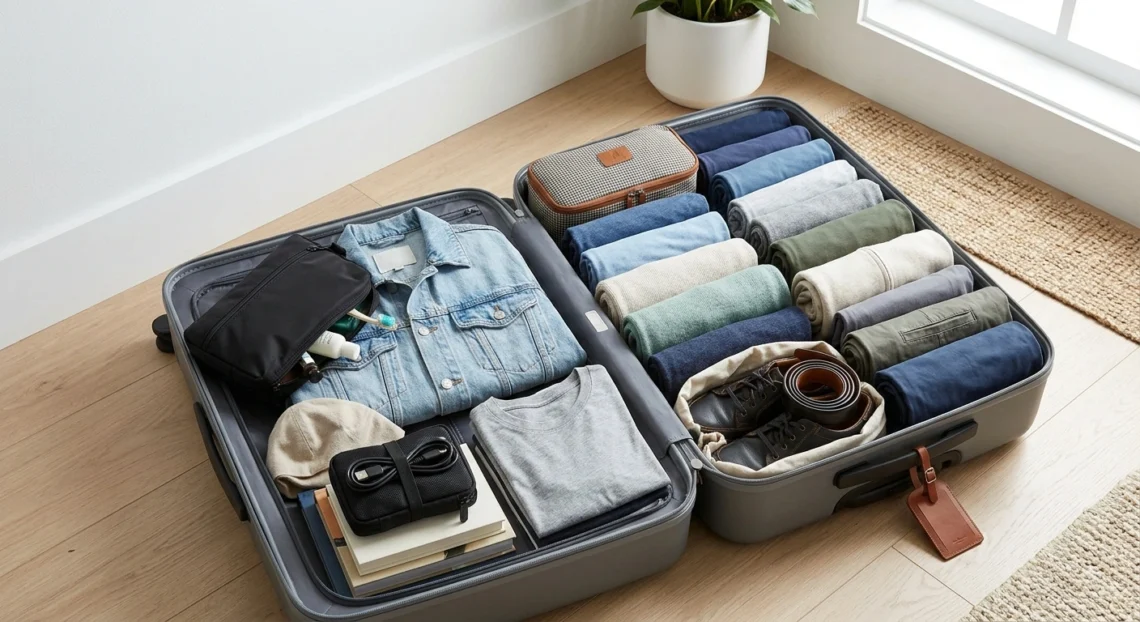
Everyone has a packing system, and almost everyone’s system leaves them sitting on top of a suitcase trying to force the zipper closed. The good news is that the best way to pack a suitcase isn’t complicated — it comes down to a handful of habits that consistently save space, cut down on wrinkles, and keep you from digging through everything to find your charger.
Quick Answer
The best way to pack a suitcase is to layer heavy items at the bottom, use packing cubes to separate clothing categories, roll casual and wrinkle-resistant items while folding structured or delicate pieces, fill gaps with soft items like socks and underwear, and keep frequently needed items near the top. This combination — sometimes called the “hybrid” method — consistently outperforms either pure rolling or pure folding on its own.
Start With the Right Layering Order
Packing works best from the bottom up, by weight and structure:
- Bottom layer: Shoes, toiletry bags, and any bulky or rigid items
- Middle layer: Packing cubes filled with clothing
- Top layer: Delicate or frequently needed items, plus anything you want to grab without unpacking everything else
This order keeps heavier items from crushing softer ones and makes your suitcase easier to live out of during the trip, not just easier to close on day one.
Roll or Fold? Here’s the Actual Answer
The rolling-versus-folding debate has a more nuanced answer than either side usually admits: use both, matched to the fabric.
Roll these:
- T-shirts, casual tops, and other lightweight cotton items
- Pants, shorts, and jeans
- Anything wrinkle-resistant
Rolling can save roughly 15–20% more space compared to folding the same items, and it has the added benefit of letting you see everything at a glance instead of digging through a stack.
Fold these:
- Dress shirts, blouses, and anything structured
- Knitwear and sweaters (rolled loosely if you do roll them, since tight rolling can stretch knits)
- Delicate fabrics like silk or linen, ideally with tissue paper between layers to reduce creasing
Frequent travelers who’ve tested both methods extensively tend to land in the same place: a mix works better than committing fully to one approach.
Use Packing Cubes to Actually Stay Organized
Packing cubes aren’t just for neat freaks — they solve a real problem, which is clothes shifting around and creating new wrinkles mid-trip. Assign cubes by category (tops, bottoms, underwear, workout clothes) rather than tossing everything in loose, and keep one empty cube for laundry on the way home.
For rolled items specifically, compression cubes tend to work especially well — the “sausage-shaped” rolls distribute pressure more evenly, making the cube easier to zip and freeing up additional space elsewhere in the suitcase.
Fill Every Gap
Empty space is wasted space. Once your main items are packed, use small, flexible things — socks, underwear, a phone charger, a rolled belt — to stuff into gaps around the edges of the suitcase and inside shoes. This single habit alone can noticeably increase how much it fits without adding bulk.
Best Way to Pack a Suitcase for Air Travel
If you’re flying, a few extra considerations matter. Keep a full change of clothes and essential toiletries in your carry-on in case checked luggage is delayed. Liquids need to follow TSA (or your destination country’s) size and container rules, so pack those in an easily accessible pouch near the top rather than buried in the middle. If you’re checking a bag, weight distribution matters less than for a carry-on, where staying under a strict weight limit often means prioritizing rolled items to maximize what fits.
Best Way to Pack a Suitcase Without Wrinkles
Wrinkle prevention comes down to three things: starting with smooth clothes (give items a shake before packing), avoiding overpacking a single cube past its natural capacity, and keeping your most wrinkle-prone pieces on top rather than compressed at the bottom. A garment folder can help protect dress shirts and blouses specifically, since it keeps the fold structured instead of letting the fabric bunch.
Choosing the Right Suitcase Before You Even Start Packing
The best packing technique in the world can’t fix the wrong luggage. Before packing, make sure your suitcase actually fits the trip:
- For carry-on only travel: Check your specific airline’s size limits before buying or packing — they vary more than most people expect, and a bag that’s fine on one airline can get gate-checked on another.
- For checked luggage: Weight limits (usually 50 lbs / 23kg for economy) matter more than size here. A digital luggage scale is a worthwhile investment if you pack heavy.
- Hard-shell vs. soft-shell: Hard-shell cases protect fragile items better and resist crushing; soft-shell cases flex to fit slightly more and often have more exterior pockets for quick-access items.
How to Pack Toiletries Without a Mess
Liquids are one of the most common packing headaches, and a few habits prevent most of it:
- Decant liquids into smaller, travel-sized containers rather than packing full-sized bottles when possible
- Place all liquids in a clear, sealable pouch — required for carry-ons under most security rules, and a good habit for checked bags too in case of pressure changes
- Pack toiletries in a dedicated, separate pouch from clothing, ideally near the top of the suitcase for easy access at security or in your hotel
- Slip a piece of plastic wrap under bottle caps before closing them, which catches leaks before they reach your clothes
Packing for Short Trips vs. Long Trips
The best way to pack a suitcase changes somewhat depending on trip length:
For trips of 3–5 days, a capsule approach works well: pick 2–3 base colors, and build outfits by mixing a smaller number of versatile pieces rather than packing a full separate outfit for each day.
For trips of a week or longer, plan around doing laundry partway through rather than packing enough clothing for every single day. A travel-sized laundry detergent packet or portable clothesline takes up far less space than five extra days of clothes, and most hotels or rentals have some form of laundry access.
For multi-climate trips, pack a versatile mid-layer (a packable jacket or cardigan) rather than separate heavy items for each expected temperature, and check the weather for each specific stop rather than packing generically “for both hot and cold.”
What to Pack in Your Carry-On, Even If You’re Checking a Bag
Even travelers who check their main suitcase should keep a few things in their carry-on, in case checked luggage is delayed or lost:
- A full change of clothes
- Basic toiletries and any prescription medication
- Chargers and any essential electronics
- Anything irreplaceable or expensive (jewelry, important documents)
This single habit turns a lost-luggage situation from a trip-ruining problem into a minor inconvenience.
A Simple Packing Checklist Order
When you sit down to actually pack, working through categories in this order tends to prevent the most common mistakes:
- Lay out everything you think you want to bring before putting anything in the suitcase
- Remove at least 20% of it — most people overpack, and seeing everything laid out makes the excess obvious
- Pack bulky, rigid items on the bottom
- Add packing cubes with rolled and folded clothing
- Fill remaining gaps with soft items
- Place toiletries and frequently needed items near the top
- Do a final weight check if you’re checking the bag
That’s really the best way to pack a suitcase — not one trick, but a system that holds up trip after trip.
Common Packing Mistakes to Avoid
- Packing head-to-toe outfits in the order you’ll wear them — this sounds organized but actually wastes space compared to grouping by category
- Ignoring your suitcase’s actual shape — square-ish packing cubes waste space in curved suitcase corners; soft, flexible items work better tucked into those edges
- Overpacking “just in case” items — most travelers wear a fraction of what they bring; a tighter, well-organized suitcase beats an overstuffed one every time
- Packing head-to-toe outfits in the order you’ll wear them — this sounds organized but actually wastes space compared to grouping by category
- Ignoring your suitcase’s actual shape — square-ish packing cubes waste space in curved suitcase corners; soft, flexible items work better tucked into those edges
- Overpacking “just in case” items — most travelers wear a fraction of what they bring; a tighter, well-organized suitcase beats an overstuffed one every time
Frequently Asked Questions
What is the best way to pack a suitcase to maximize space?
Use a hybrid approach — roll casual, wrinkle-resistant items to save space, fold structured or delicate pieces, use packing cubes to keep everything organized, and fill gaps with soft items like socks and underwear.
Is it better to roll or fold clothes for travel?
It depends on the fabric. Rolling works best for casual, lightweight items and saves more space. Folding is better for dressier or delicate pieces that wrinkle easily. Most experienced travelers use both.
How do packing cubes help with suitcase packing?
Packing cubes keep clothing organized by category, prevent items from shifting and creating new wrinkles during transit, and make it easier to find things without unpacking your entire suitcase.
What’s the best way to pack a suitcase for a carry-on?
Prioritize rolling to save space, since carry-on bags typically have strict size and weight limits. Pack liquids in an easily accessible pouch to comply with security rules, and keep a change of clothes near the top.
Should heavy items go on the bottom or top of a suitcase?
Heavy and bulky items like shoes and toiletry bags should go on the bottom, with clothing layered on top. This prevents heavier items from crushing more delicate pieces during transit.
How do I avoid wrinkles when packing a suitcase?
Start with smooth, shaken-out clothes, avoid overstuffing individual packing cubes, and keep wrinkle-prone items like dress shirts on top rather than compressed at the bottom.