
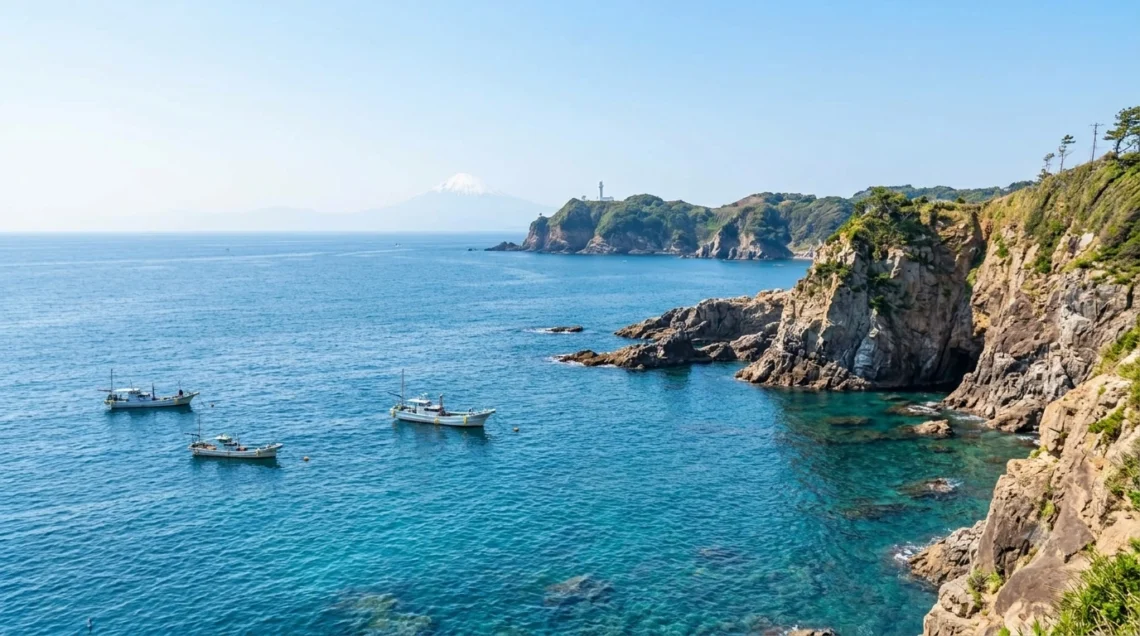
Nummazaki sits on the edge of Suruga Bay in Shizuoka Prefecture — a coastal stretch most international Japan visitors never reach. Getting there takes no special effort. It is simply not on the standard itinerary that most travelers follow between Tokyo, Kyoto, and Osaka. That gap is the best thing about it.
The highlights of Nummazaki include rugged cliff coastline, cross-bay Mount Fuji views, working fishing villages, exceptional fresh seafood, and easy access to some of the best hot spring facilities on the Izu Peninsula. The destination has remained largely untouched by large-scale commercial tourism. All of it is better for it.
Highlights of Nummazaki — Complete 2026 Coastal Travel Guide
Getting to Nummazaki from Tokyo
Nummazaki is 60 to 90 minutes from Tokyo by train. TThe route passes through Numazu Station, located in Shizuoka Prefecture. From Numazu, local buses reach the coastal areas where the highlights of Nummazaki sit. A rental car from the station gives more flexibility — smaller fishing communities and specific cliff viewpoints are difficult to reach by public transport alone.
From Shizuoka City the trip runs about 30 minutes. Both directions work for day trips, though staying one or two nights reveals significantly more than arriving and leaving the same day.
Nummazaki Coastal Cliffs and Walking Trails
The Nummazaki coastline is rocky, irregular, and dramatic. Volcanic forces and centuries of Pacific erosion shaped it into something that looks nothing like a resort beach. Rocky capes push out into the bay. Narrow inlets cut between cliff walls. Coastal caves open at low tide. Pine trees along the upper cliff edge grow bent sideways from years of sea wind.
Walking trails run along the cliff top between viewpoints. Short loops take 30 minutes. Longer routes continue south toward the Izu Peninsula for several hours. The trail is quietest before 9am — arrive early and the path feels entirely yours.
Pack rubber-soled shoes. Some sections get slippery after rain. Carry your own water as there are no shops along the trail. A windproof layer helps even in warm weather — the sea breeze gets strong regardless of the season. These coastal trails are among the top highlights of Nummazaki for active travelers who want scenery without crowds.
Mount Fuji Views Across Suruga Bay
On clear days, Mount Fuji appears across the water from multiple points along the Nummazaki coastline. Viewing Mount Fuji across the water offers a completely different perspective than experiencing it from the foot of the mountain. The mountain rises behind the bay horizon with nothing in between — sky, water, then summit.
Several cliff positions along the walking trail give open sightlines across the bay. Harbor areas at lower elevation offer a different framing — Fuji between fishing boats and waterfront buildings.
Winter mornings give the clearest views. Cold dry air cuts the haze and the mountain appears sharp against blue sky. Autumn runs close behind. Summer visibility drops as humidity builds — though when Fuji does show through summer conditions, the effect is striking in its own way. Mount Fuji views across the bay rank among the most unexpected highlights of Nummazaki for travelers who did not specifically come for them.
Traditional Fishing Villages Along the Coast
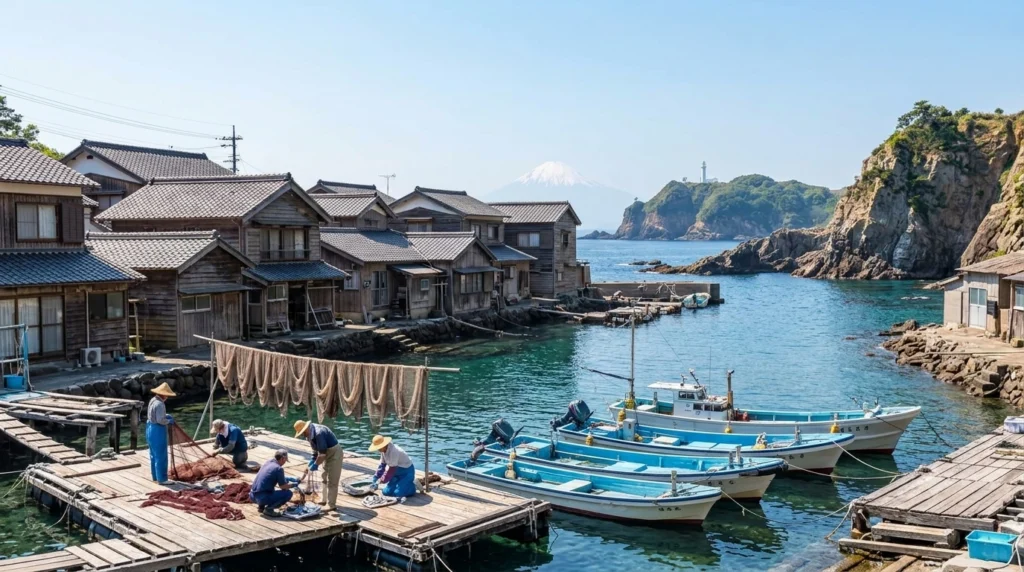
Small fishing communities line the Nummazaki coast. They are not tourist destinations. They are working villages where fishing is the primary occupation and life runs on tide schedules rather than visitor preferences.
Daily life here runs on tide charts and weather patterns, not check-in times. Buildings face the water because that is practical, not scenic. Morning activity at the harbor starts before sunrise and wraps before most travelers have had breakfast.
Walking through these villages slowly and quietly gives access to a version of Japanese coastal life that organized tourism has not yet reached. Shinto shrines and small Buddhist temples sit along narrow lanes — active places of worship used by local residents on ordinary days.
Getting to the harbor before 7am is worth the early start. Boats return, catches get sorted, market workers move fast. It is one of the genuine highlights of Nummazaki that no tour operator packages.
Suruga Bay Marine Life
Suruga Bay reaches depths of approximately 2,500 meters, making it the deepest bay in Japan. Cold water rising from those depths carries nutrients that support species rarely found in shallower coastal water nearby.
Dolphins move through the bay seasonally. Seabirds are active along the cliff faces in early morning. Rocky shoreline sections at low tide hold visible tide pools with crabs, small fish, and sea anemones.
Boat tours from local harbors offer offshore wildlife watching during appropriate seasons. Summer snorkeling works in the calmer cove sections. Cliff viewing positions above the water are productive for watching seabird activity without any equipment or cost.
Bioluminescent organisms appear in the bay occasionally under specific conditions. It cannot be planned for. When it happens it is one of those highlights of Nummazaki that no photograph captures adequately.
Fresh Seafood from Suruga Bay
Suruga Bay produces high quality seafood. Local restaurants get their supply within hours of the catch. Preparation stays simple — minimal seasoning, clean presentation, the ingredient doing the work. Ask what came in fresh that morning rather than ordering off a fixed menu. The answer changes daily and the freshest option is always the best one on the table.
Key things to eat:
Savor freshly prepared sashimi made from the day’s finest catch, with seasonal varieties available throughout the year. March to May and September to November bring the widest selection. Winter delivers species not found in inland restaurants. Kaisendon — seasoned rice topped with multiple fresh catch varieties. Filling, affordable, genuinely local.
Grilled whole fish with pickled vegetables, miso soup, and rice. Simple food that reflects the quality of what the bay produces. Harbor vendor food near the working docks — skewered seafood, cooked snacks, and local sweets sold during morning market hours. Low prices, high quality, a setting that cannot be replicated in a sit-down restaurant.
Fresh seafood is consistently rated the number one highlights of Nummazaki experience by travelers who visit. Budget roughly ¥3,000 to ¥6,000 per person per day for food and local transport.
Hot Springs and Ryokan on the Izu Peninsula
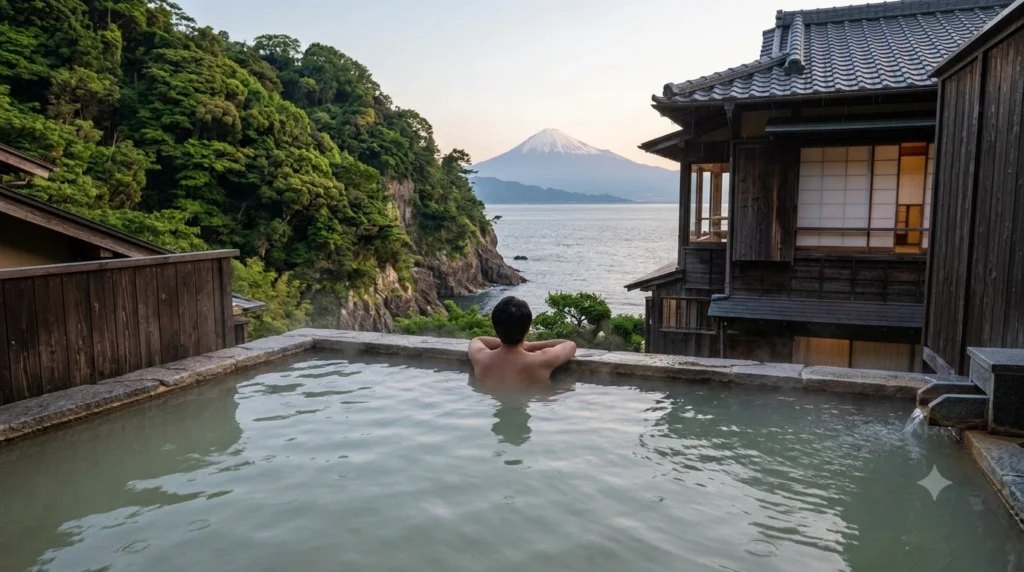
The Izu Peninsula starts just south of Nummazaki. Four tectonic plates meet under this ground — the result is one of Japan’s highest concentrations of natural hot spring sources.
Shuzenji is the closest established onsen town. A path along a bamboo-lined river connects the main bathing facilities. Ryokan here have been operating for centuries. Most include dinner and breakfast in the room rate — Izu seafood, seasonal vegetables from the Shizuoka interior, green tea from local farms.
Accommodation options split between large resort-style onsen properties and small family-run guesthouses where one family handles the whole operation including the evening meal. Both deliver something that hotel chains cannot — a stay that feels connected to where you actually are.
Staying overnight rather than day-tripping changes what you get from the highlights of Nummazaki significantly. Morning light on the bay before other visitors arrive. An evening meal reflecting that day’s local catch. Time to sit still rather than move between stops.
Best Time to Visit Nummazaki
Winter (December to February): Clearest Fuji views of the year. Almost no visitors. Cold but manageable with proper layers. Spring (March to May): Mild temperatures, good trail conditions, widest fresh catch selection. Cherry blossom adds color to forested coastal sections.
Summer (June to August): Warmest water, longest days, best snorkeling. Fuji visibility drops but bay activity increases. Autumn (September to November): Second best overall. Clear skies, comfortable walking temperatures, reduced crowds from summer peak.
Frequently Asked Questions
What should first-time visitors prioritize among the highlights of Nummazaki?
First-time visitors should focus on four things: the cliff walking trail for bay views, the fishing harbor before 7am to see daily catch activity, a seafood meal asking for the day’s fresh catch, and a clear-day viewpoint for Mount Fuji across the water. These four cover the essential character of the highlights of Nummazaki within a single full day.
How long does it take to reach Nummazaki from Tokyo?
60 to 90 minutes by train through Numazu Station in Shizuoka Prefecture. Local transport from Numazu reaches the coastal area. A rental car from the station gives the best access to smaller villages and specific viewpoints along the coast.
Is Nummazaki good for families?
Yes. Tide pools, harbor morning visits, seafood meals, and easier walking routes all work for families. The area moves at a calm pace which suits some families well. Parents should watch young children carefully near cliff-edge sections where safety barriers are minimal or absent.
What is the food like in Nummazaki?
Fresh seafood from Suruga Bay dominates everything. Sashimi, kaisendon, grilled fish, and harbor vendor food are the main eating experiences. Quality is high because supply chains between boat and kitchen are short. Vegetarian options are limited — the local food identity is built around what the bay produces each day.
Can Nummazaki be combined with other destinations?
Yes. The Izu Peninsula south of Nummazaki adds onsen towns and more coastal driving. Shuzenji combines naturally with a Nummazaki coastal day for a coast-and-hot-springs itinerary. The Fuji Five Lakes area north of Shizuoka pairs well — two coastal days at Nummazaki followed by two mountain days at the lakes gives strong contrast within a single efficient trip from Tokyo.
Conclusion
The highlights of Nummazaki do not advertise themselves. Rocky coastline above Suruga Bay. Fuji across the water on clear mornings. Fishing villages running on their own schedule. Seafood from one of Japan’s deepest and most productive bays. Hot springs at the end of the day.
None of it has been arranged for visitors. All of it is better for that reason. Arriving in Nummazaki means stepping outside the itinerary that most Japan travelers follow. What you find there stays with you longer than most things on the standard route.