
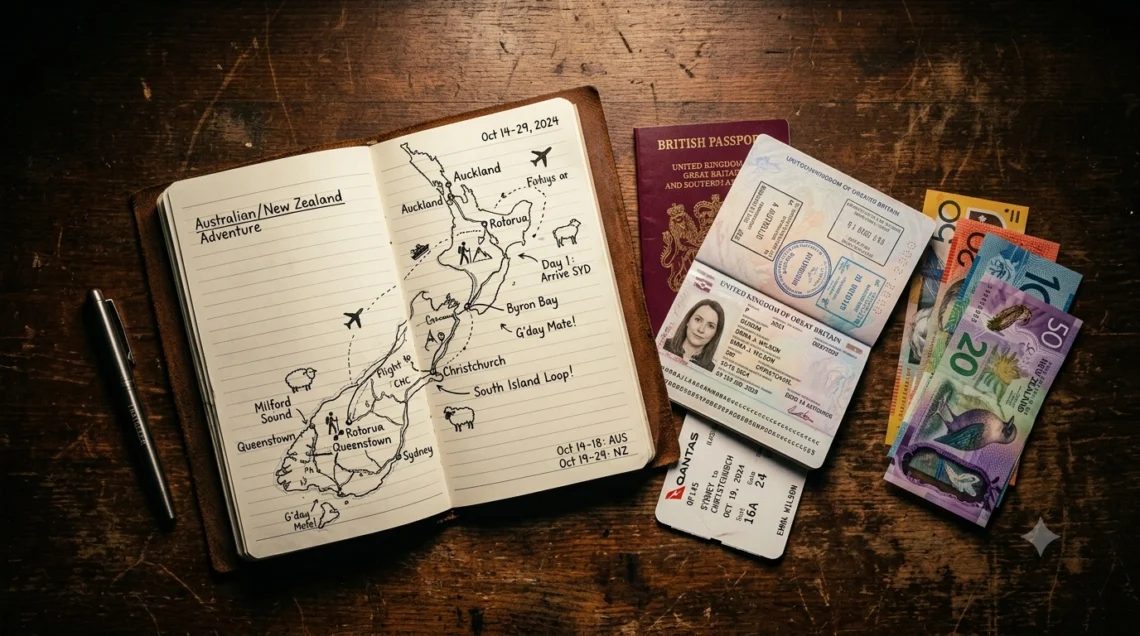
When I started digging into thelowdownunder travel planning for my own Australia-New Zealand trip, I hit the same wall most people hit: every guide told me what to see, but almost nobody told me what it actually costs, how the routes work, or where the money quietly disappears. So this guide takes a different approach. Instead of another list of “must-see” landmarks, this is a real numbers-and-logistics breakdown — the kind I wish I’d had before I booked my first flight.
What “Thelowdownunder Travel” Actually Covers
For anyone new to the term, thelowdownunder travel is shorthand for planning a trip across the “down under” region — Australia, New Zealand, and often nearby Pacific stops like Fiji. What makes this region tricky to plan for isn’t the destinations themselves; it’s the combination of long-haul flights, short but pricey domestic hops, and a wide range of possible budgets depending on how you travel.
Below, I’ve broken thelowdownunder travel planning down into the pieces that actually determine your trip: budget tiers, flight strategy, city-by-city costs, transport choices, and the fees that catch first-timers off guard.
Budget Tiers: What Different Travel Styles Actually Cost
Rather than giving one vague number, here’s how daily spending on thelowdownunder travel typically breaks down per person, based on current 2026 pricing across the region:
| Travel Style | Daily Budget (USD) | What’s Included |
| Backpacker / Budget | $100–$150 | Hostel dorms, self-catering, public transport, free activities |
| Mid-Range | $200–$400 | Private rooms or budget hotels, mix of dining out and cooking, some paid tours |
| Comfort | $250–$600 | Nicer hotels, regular restaurant meals, rental car or regular domestic flights |
| Luxury | $600–$1,200+ | Boutique lodges, private tours, helicopter or scenic flights, fine dining |
A useful rule of thumb: international flights alone typically account for 30-45% of your total trip cost, so it’s worth spending as much time optimizing that one line item as everything else combined.
A Real Example Worth Knowing
One well-documented three-week trip to New Zealand for two people came out to roughly $12,481 NZD total (excluding international flights), which works out to about $312 NZD per person, per day. Adjusted for 2026 pricing, that’s closer to $334 NZD per person daily — useful as a mid-range benchmark if you’re building your own budget from scratch.
Flight Strategy: Where Most of the Money Gets Spent (or Saved)
Flying Between Australia and New Zealand
If your route includes hopping between the two countries, this is one of the cheaper short-haul legs in international travel. Sydney to Auckland takes around 3 hours, and one-way fares have recently been found as low as $270 AUD, with budget carriers like Jetstar consistently the cheapest option — Jetstar alone is used by roughly 46% of travelers making this specific route.
Timing Your Booking
Data from flight search engines consistently shows Tuesday and Thursday as the cheapest days to fly this route, while Monday tends to be the most expensive. Morning departures also tend to run cheaper than evening ones. Booking 6-8 weeks ahead of your travel date is the sweet spot — leaving it to the final few weeks almost always pushes prices up.
Long-Haul Flights In
If you’re flying in from North America or Europe, expect round-trip economy fares somewhere in the $800-$1,800 range depending on departure city and season. Fares can jump 20-40% during the December-February peak season and the June-August ski season, so shoulder-season travel (March-May or September-November) is where the real savings live.
The Fee Most Thelowdownunder Travel First-Timers Miss
Here’s something that catches a lot of travelers by surprise: New Zealand’s International Visitor Levy was significantly increased in 2026, rising from NZ$35 to NZ$100 — nearly triple the previous rate. It’s a mandatory charge, and skipping it in your budget planning is an easy way to be caught off guard at the border. Applying online at least 72 hours before travel is the safest approach, since processing is usually fast but not guaranteed instant.
Getting Around Once Your Thelowdownunder Travel Trip Begins
Domestic Flights vs. Driving
Australia’s sheer size makes domestic flights the practical choice for covering long distances between major hubs like Sydney, Melbourne, Brisbane, and Perth. Trying to drive those same distances eats days you probably don’t have. New Zealand is more compact, which is why road trips there — by car or campervan — tend to make more sense than domestic flights for most itineraries.
The Campervan Question
For New Zealand specifically, renting a campervan instead of relying on hotels is one of the most talked-about ways to control costs, since it combines accommodation and transport into a single expense. It works particularly well outside peak season, when campsite fees are lower and availability isn’t an issue.
Scenic Rail
If time isn’t tightly constrained, long-distance rail routes through both countries offer something flights and driving can’t: unbroken views of the landscape changing in real time, from coastline to alpine terrain. It’s slower travel by design, but many travelers name it as a trip highlight rather than just a means of transport.
City Transit
Within major cities like Sydney, Melbourne, Auckland, and Wellington, public transport systems are generally well-developed and easy to navigate once you download the relevant transit app ahead of time — doing this before you land, rather than after, saves a surprising amount of first-day confusion.
City-by-City: What to Actually Expect
Sydney
The obvious first stop for most itineraries, and worth it — the Harbour Bridge and Opera House hold up in person. Accommodation here runs on the higher end for the region, so booking early matters more in Sydney than almost anywhere else on a typical route.
Melbourne
A different pace from Sydney, built around laneway culture, coffee, and a food scene that rewards slower exploration rather than a checklist approach. Generally slightly more affordable for dining and accommodation than Sydney.
Auckland and Wellington
Auckland works well as a flight hub and short-stay base, while Wellington — New Zealand’s capital — tends to reward travelers who linger a couple of extra days rather than passing through.
Queenstown
The adventure-sports capital of the region — bungee jumping, skydiving, and alpine activities all cluster here. Popular activities book out weeks in advance during peak season, so this is one destination where last-minute planning genuinely costs you options, not just money.
Tasmania and New Zealand’s South Island
Both regions are frequently described as the “quieter” alternative to their more famous mainland counterparts — less crowded, more raw landscape, and generally a slower travel pace that rewards travelers who aren’t trying to see everything.
Where the Budget Quietly Leaks
A few categories that rarely get their own line item in a thelowdownunder travel budget, but consistently add up:
- Activity bookings – adventure sports, tours, and entry fees can rival accommodation costs if you’re not tracking them
- Local transport – short taxi or rideshare trips between transit stops add up faster than people expect
- Dining near attractions – restaurants directly beside major landmarks are reliably overpriced compared to options two or three streets away
- Currency conversion fees – using the wrong card or exchange method can quietly cost several percent on every transaction
Sample Itineraries by Trip Length
5 Days: Sydney + Melbourne Only
This is realistically enough time for two major cities without feeling rushed. Spend 3 days in Sydney covering the Harbour, Bondi, and the Opera House precinct, then a 1-hour domestic flight to Melbourne for 2 days of laneway exploration and food. Expect this to sit toward the lower end of the mid-range budget tier since you’re skipping long-haul internal flights and expensive adventure activities.
7-10 Days: Australia’s East Coast
A week to ten days is enough to string together Sydney, Melbourne, and a shorter stop like the Gold Coast or Cairns for reef access. Domestic flights become a bigger line item here since you’re covering serious distance, so booking those 6-8 weeks out matters even more than the international leg.
2 Weeks: Australia and New Zealand Combined
This is the itinerary most people picture when they think of thelowdownunder travel — a few days in Sydney or Melbourne, a short hop across to Auckland or Christchurch, then a road trip or rail journey through New Zealand’s more scenic regions. Two weeks is enough to avoid feeling rushed but tight enough that you’ll want to pick 2-3 focus regions rather than trying to circle the entire country.
3+ Weeks: The Full Loop
Three weeks or more allows for genuinely slow travel — time in both major cities and quieter regions like Tasmania or the South Island, without needing to skip the campervan or scenic rail options because of time pressure. This is also where the daily-cost benchmark of around $312-334 NZD per person (from the documented three-week example above) becomes a realistic planning anchor.
Visa and Entry Requirements Worth Checking Early
Entry requirements vary by nationality, but a few things are worth confirming well before you book any thelowdownunder travel flights:
- Passport validity – most entry requirements expect at least six months of validity remaining beyond your planned departure date
- Visa or eTA requirements – both Australia and New Zealand require some form of electronic travel authorization for most visitors, and processing isn’t always instant
- Proof of onward travel – some border checks ask for evidence you’re not staying indefinitely, particularly on one-way tickets
- Health and customs declarations – both countries have strict biosecurity rules around food, plants, and outdoor equipment, and fines for undeclared items are taken seriously
Sorting these out 4-6 weeks ahead of departure avoids the scramble of last-minute processing, especially during peak travel seasons when application volumes spike.
Packing Considerations Specific to This Region

A few region-specific packing notes for thelowdownunder travel that don’t come up in generic travel guides:
- Weather swings between islands and regions – Tasmania and New Zealand’s South Island can be noticeably colder than mainland Australia even in the same month, so layering matters more than most people expect
- Sun protection – both countries sit under some of the highest UV exposure levels globally; sunscreen and a hat aren’t optional extras
- Adapter type – Australia and New Zealand share the same plug type, which is different from both US and UK standards, so a single adapter covers the whole trip
- Hiking gear for biosecurity checks – if you’re bringing hiking boots or camping gear, expect them to be checked and possibly cleaned at the border due to strict biosecurity rules
Money-Saving Habits That Actually Move the Needle
Beyond the obvious “book early” advice, a few habits make a measurable difference over a full trip:
- Use a fee-free travel card rather than a standard debit card, since currency conversion fees on regular cards can quietly cost several percent per transaction across a multi-week trip
- Cook at least a few meals even on a comfort-tier budget — hostels and many Airbnb-style stays include kitchen access, and even two or three self-cooked meals a week adds up over time
- Bundle activity bookings where tour operators offer combo pricing, particularly around adventure-sport hubs like Queenstown where multiple activities are often discounted together
- Track spending weekly rather than daily — daily tracking on a long trip becomes tedious and gets abandoned, while a weekly check-in is realistic to maintain and still catches budget drift early
Building Your Own Thelowdownunder Travel Budget
Rather than copying someone else’s number, work backward from your travel style:
- Pick your daily budget tier from the table above based on how you actually like to travel
- Add international flights (30-45% of total cost is a reasonable planning assumption)
- Add the visitor levy and any visa costs upfront
- Set aside a separate “activities” fund rather than folding it into daily spending — this is the category most likely to blow past expectations
Common Mistakes That Cost Travelers the Most
Looking back at my own trip and comparing notes with other travelers who’ve done thelowdownunder travel, a handful of mistakes come up again and again:
Underestimating domestic flight costs. International flights get all the attention during planning, but the domestic hops between Sydney, Melbourne, and other hubs — or between the North and South Islands in New Zealand — add up faster than expected if they’re booked late.
Not accounting for the visitor levy until arrival. With the fee now sitting at NZ$100, this is no longer a rounding error in your budget. Build it in from day one of planning, not as an afterthought at the airport.
Overpacking the itinerary. Trying to fit both countries and five cities into ten days usually means spending more time in transit than actually experiencing any single place. Fewer stops, done properly, consistently beats a rushed checklist.
Booking activities on arrival instead of in advance. Popular experiences in places like Queenstown fill up weeks ahead during peak season. Arriving without a booking often means paying a premium for whatever’s left, or missing out entirely.
Ignoring shoulder season entirely. Peak summer gets the most attention online, but shoulder-season travel (autumn or spring in the Southern Hemisphere) consistently delivers lower prices and smaller crowds for a nearly identical experience in most regions.
Frequently Asked Questions
How much does a typical thelowdownunder travel trip to Australia and New Zealand cost per day?
It depends heavily on travel style — budget travelers can manage on $100-150/day, mid-range travelers typically spend $200-400/day, and luxury travelers can spend $600-1,200+ per day, per person.
What is New Zealand’s International Visitor Levy?
It’s a mandatory entry fee that increased in 2026 from NZ$35 to NZ$100, and it should be factored into your budget and applied for at least 72 hours before travel.
Is it cheaper to fly or drive between cities in Australia?
For long distances, domestic flights are usually more time- and cost-efficient than driving, given the size of the country, while shorter regional trips are often better suited to a rental car.
When is the cheapest time to fly between Australia and New Zealand?
Tuesday and Thursday departures, particularly in the morning, tend to be the cheapest, while Monday evening flights are generally the most expensive.
Should I book a campervan or hotels for a New Zealand road trip?
A campervan can reduce combined accommodation and transport costs, especially outside peak season, while hotels offer more comfort and convenience if you’re prioritizing rest over budget savings.
Final Thoughts
The most useful thing I’ve learned about thelowdownunder travel is that the region punishes vague planning and rewards specific planning. Knowing that Tuesday flights are cheaper than Monday, that the visitor levy tripled, or that Queenstown activities book out weeks ahead isn’t exciting information — but it’s the difference between a trip that stays on budget and one that doesn’t. Start with real numbers, build your itinerary around your actual travel style, and leave the rest of the planning energy for the parts of the trip no spreadsheet can predict.
This article was researched and published by the Techsaaswrote Editorial Team to provide accurate, helpful, and up-to-date travel information for our readers.