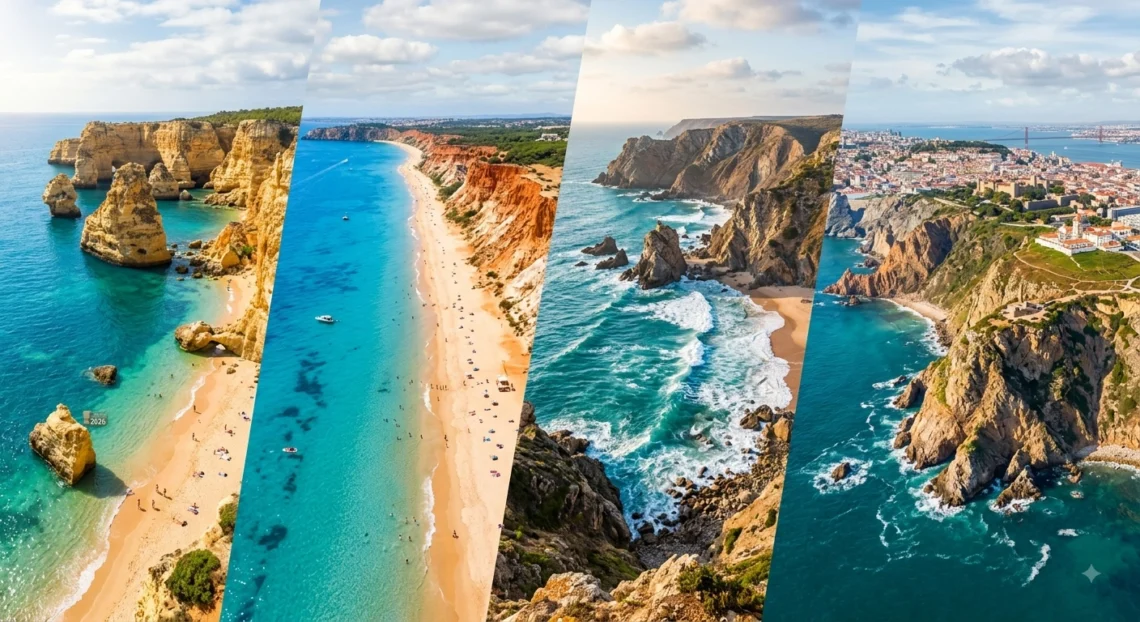
Portugal does not need to oversell its coastline. The beaches make the case on their own — and in 2026, the numbers back them up. Portugal ranked third worldwide for Blue Flags in 2025, with 88 active Blue Flags awarded for the 2026 season across the Algarve alone. For context, Blue Flag certification requires clean water, good facilities, and environmental management — not just pretty sand and a pleasant view. Portugal earns these certifications across a coastline that stretches from the wild Atlantic surf beaches of the Alentejo coast down to the golden cliff formations of the southern Algarve.
I have traveled Portugal’s coastline from Sagres in the southwest up through the Sintra coast north of Lisbon, and the consistent quality across completely different coastal characters is what genuinely distinguishes it from most European beach destinations. Portugal’s coastal range feels almost unfair for a country its size — surf beaches, sheltered lagoons, cliff coves, and long open sands all within reach of each other without a day’s drive between them. a single trip.
This guide covers the best beaches in Portugal by region, by traveler type, and by the specific questions most visitors arrive with — where are the best beaches near Lisbon, Which Algarve beaches are best for families, where can you expect genuinely good swimming, and what do the 2026 rankings tell us about the places worth visiting?
Where Are the Best Beaches in Portugal? The 2026 Rankings
Portugal’s best beaches for 2026 have been revealed in a new ranking based on thousands of Google Maps reviews, with the Algarve dominating the list despite Sintra’s Praia da Adraga taking first place overall. The beach received a 4.8-star rating from 2,847 reviews. The ranking is dominated by the Algarve, with 10 of Portugal’s top 20 beaches located in the region.
That result contains two important pieces of information for planning. First, the Algarve is not simply the most famous Portuguese beach destination — it remains the highest-rated one by independent review data in 2026. Second, the Sintra coast north of Lisbon produces a beach quality that matches the Algarve at its best — which means visitors based in Lisbon do not need to make the three-hour drive south to find world-class beaches.
Best Beaches in Portugal Algarve: Region-by-Region Guide
The Algarve can be divided into three main coastal areas, with each one offering a different atmosphere and landscape. The Western Algarve from Sagres through Lagos and Burgau is a cliff-and-cove zone with dramatic sandstone formations, sea stacks, smaller beaches, cooler water, and bigger Atlantic swell — best for photographers, surfers, and dramatic scenery. The Central Algarve covers the most visited area between Lagos and Albufeira, combining iconic rock arch beaches with large resort sands. The Eastern Algarve from Faro through Tavira to the Spanish border offers calm lagoon beaches and barrier islands with a completely different character from the western coast.
Western Algarve — Dramatic Scenery and Surf
Praia da Marinha is the standout of the western Algarve and one of the most recognized beach photographs in all of Europe.
Praia da Marinha is widely recognized as one of Europe’s most stunning beaches. It is located on the rugged coast of Caramujeira in Lagoa, with a sandy beach framed by stunning orange limestone cliffs. It has been celebrated by the Michelin Guide as one of the top ten most beautiful beaches in Europe.
The view looking down onto Praia da Marinha is probably the most iconic spot in the Algarve — it is easy to see why with how stunning the view is, The beach is frequently featured among the world’s most beautiful coastal destinations. Reaching it involves a steep staircase, so visitors need a reasonable level of fitness, but the climb is rewarded with a protected cove and exceptionally clear water where fish can easily be seen. along the rock walls. Snorkelling directly from the beach delivers encounters that most dedicated snorkelling tours charge premium prices to provide.
Praia de Benagil sits just east of Marinha and offers one of the most unusual beach experiences available anywhere in Portugal.
Benagil Beach is a compact stretch of golden sand surrounded by rugged cliffs near the quiet coastal village of Benagil. It is the gateway to the spectacular Benagil Sea Cave, one of the most photographed natural formations in Portugal.
The sea cave is accessible by swimming from the beach on calm days, or by joining one of the small boat tours that operate from the water’s edge. The cave’s cathedral-like interior — a circular opening in the ceiling allowing sunlight to illuminate a sandy beach inside — is the kind of natural formation that makes even jaded travelers stop and take photographs they already know do not fully capture what they are seeing.
Praia de Camilo in Lagos deserves specific mention in 2026 with an important update.
Access to Camilo Beach via the staircase is temporarily unavailable after winter storms caused part of the cliff to collapse. Officials are conducting a safety assessment before deciding whether and when the route can reopen. The viewpoint at the top is still open and worth the stop — you just cannot currently walk down to the sand. Boat tours of Ponta da Piedade will still take you right past the beach and its search. Check local signage before visiting and plan around the boat tour option if the staircase remains closed during your visit.
Central Algarve — Resort Beaches and Long Sands
Praia da Falésia near Albufeira is the longest continuous beach in the Algarve and delivers the most dramatic cliff backdrop of any easily accessible beach in the region.
Falesia is the longest beach in the Algarve — the sand and uninterrupted coastline looks like it goes on for miles, with sections of umbrellas for rent dotting the sand, but plenty of room to bring your own. The striking red and orange cliffs brought to mind the dramatic rock formations found in Bryce Canyon, Utah. and are unlike anywhere else in the Algarve.
The cliff backing means access points are limited to staircase descents at intervals along the beach, which naturally distributes visitors rather than concentrating them at a single entry point. Even during peak summer weeks the beach never feels as crowded as its quality level might suggest it should.
Eastern Algarve — Lagoon Islands and Calm Water
Ilha de Tavira and the barrier island beaches of the eastern Algarve operate in an entirely different register from the cliff-backed coves of the west.
Reached via a small tourist train or a footbridge walk across the Ria Formosa, Praia do Barril feels distinctly different from the cliff-backed beaches of the western Algarve. Located in Tavira, the sand stretches in a flat, uninterrupted line along the Atlantic, and the sea can be lively when the wind picks up. Facilities are seasonal and spaced out, so even in summer it feels less hemmed in than many central Algarve spots.
The Ria Formosa lagoon that surrounds these barrier islands is a designated natural park and a significant bird habitat — adding a wildlife dimension to the beach experience that the cliff-backed western beaches cannot offer.
Best Beaches in Portugal Near Lisbon
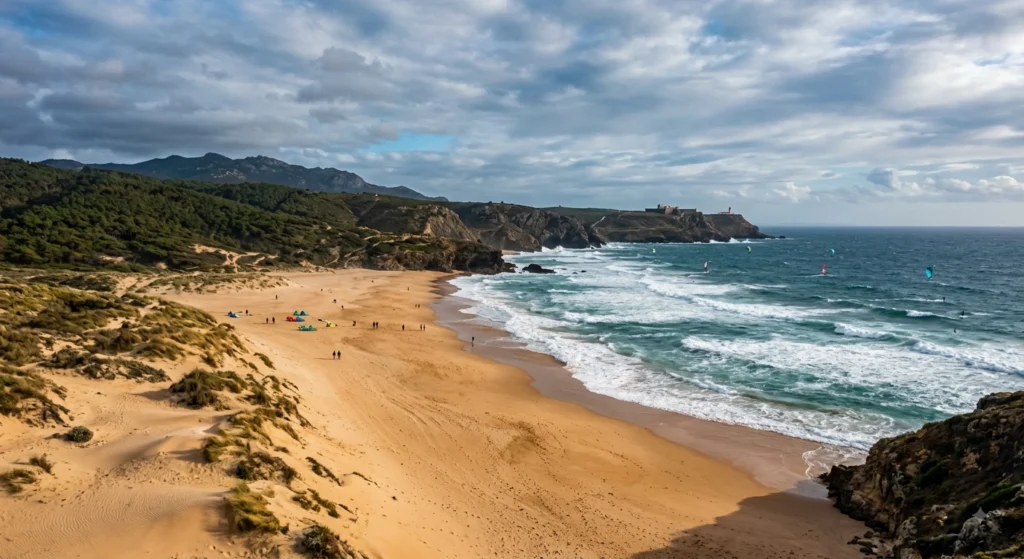
Lisbon visitors who want to avoid the three-hour drive to the Algarve have genuinely excellent options within 30 to 45 minutes of the city.
Praia de Cascais — accessible from Lisbon by train in approximately 40 minutes — sits in a sheltered bay position that produces consistently calmer water than the exposed Atlantic beaches further up the Sintra coast. The combination of beach access, historic town center, marina, and clifftop walk to Boca do Inferno makes a full day here consistently rewarding without requiring a car.
Praia do Guincho sits approximately 30 kilometres west of Lisbon near Cascais and delivers a completely different experience from the protected Cascais bay. Wide, wind-exposed, and backed by the sand dunes and pine forest of the Sintra-Cascais Natural Park, Guincho is consistently rated among Europe’s finest windsurfing and kitesurfing destinations. The surrounding landscape gives it a raw, cinematic quality that the more managed resort beaches of the Algarve cannot replicate.
Praia da Adraga in Sintra earned the top position in the 2026 Google Maps review ranking — the highest-rated beach in Portugal by independent user reviewsLocated within Sintra-Cascais Natural Park, the beach benefits from a largely unspoiled setting, where dramatic cliffs, clear Atlantic waters, and strong environmental protections create a beautiful natural escape delivers an experience that feels genuinely wild despite being accessible within an hour from central Lisbon.
Praia de Setúbal — Arrábida south of Setúbal produces some of the clearest, most intensely blue water of any beach near Lisbon — a quality explained by the limestone geology with the Serra da Arrábida helping naturally filter water before it flows toward the coast. Access to the finest beaches within the Arrábida Natural Park is controlled during peak summer months to protect water quality — the restrictions are worthwhile.
Best Beaches in Portugal for Families
Praia da Falésia near Olhos de Água is the top family pick in the Algarve: huge sand area, gentle slope into the water, calmer sea than the western coast, and plenty of room to spread out.
For families with young children, the eastern Algarve’s lagoon beaches around Tavira and the barrier islands of the Ria Formosa offer shallow, warm, calm water that the exposed Atlantic beaches of the western coast and the Sintra coastline cannot provide. The lagoon conditions create naturally sheltered swimming environments where the Atlantic swell is absent and water depths increase gradually.
Families choosing Cascais get three things at once — a bay that filters out the Atlantic swell, facilities that actually work, and a town that solves lunch, ice cream, and shade without any planning required. easy access to shade, food, and accommodation.
Comporta, north of the Alentejo coast, offers an increasingly popular family alternative to the crowded Algarve — wide pine-backed beaches with calm water during summer months and accommodation that leans toward spacious holiday rental properties rather than resort hotels.
Best Beaches in Portugal for Swimming
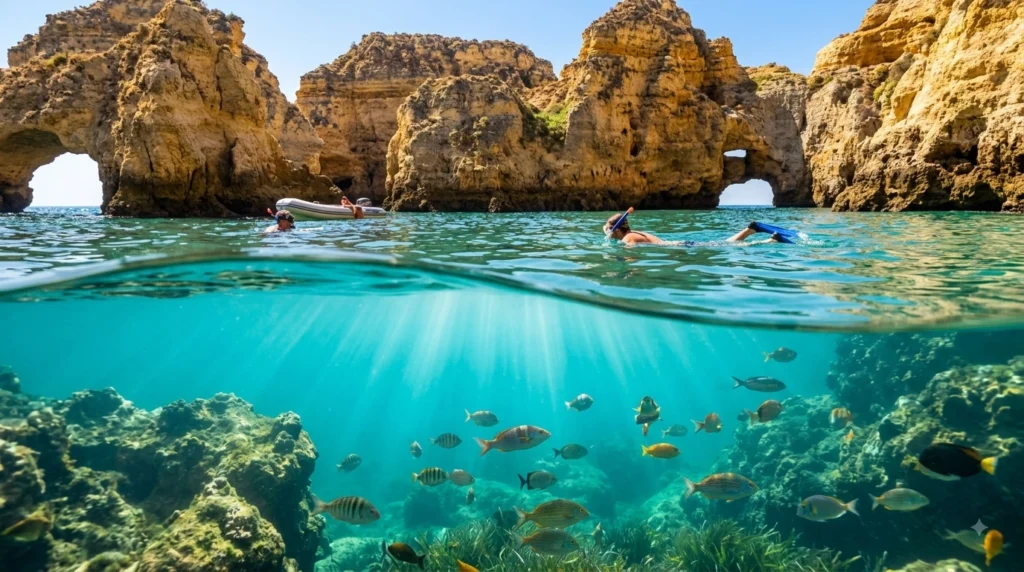
The best beaches in Portugal for swimming depend on what kind of swimming experience you are looking for. For calm, warm, clear water ideal for recreational swimming and snorkelling, the eastern Algarve lagoon beaches and the sheltered coves of the central Algarve perform best. For ocean swimming with consistent quality and wave patterns that reward more experienced swimmers, the western Algarve and Alentejo coast deliver reliably.
Water temperature in the Algarve peaks between 22°C and 24°C in August — genuinely comfortable for extended swimming. The Sintra coast runs several degrees cooler due to Atlantic currents that produce the conditions favoured by surfers and kitesurfers but less comfortable for casual recreational swimming.
Praia da Marinha’s sheltered position within its limestone cove produces water clarity and temperature that make it consistently recommended for snorkelling — the visibility in the cove on calm days is among the finest of any easily accessible beach in Portugal.
Best Beaches in Portugal Map: How to Navigate the Coastline
The Algarve can be divided into three main coastal areas, with each one offering a different atmosphere and landscape.
The Algarve’s best beaches cluster around three towns that serve as natural bases: Lagos for western Algarve access (Marinha, Benagil, Camilo, Ponta da Piedade); Albufeira for central Algarve access (Falésia, Olhos de Água, Praia dos Pescadores); and Tavira for eastern Algarve access (Ilha de Tavira, Barril, Cacela Velha). A rental car is strongly recommended for exploring the Algarve comprehensively — public transport reaches the main towns but misses the smaller coves and natural park beaches that represent some of the finest coastal experiences in the region.
For Lisbon-based exploration, the Cascais train line handles the primary coastal options to the west, while Setúbal and Arrábida require either a rental car or a day trip tour from the city.
Best Beaches in Portugal: Practical 2026 Information
Best time to visit: June through September offers the most reliable conditions across all the best beaches in Portugal. May and October deliver excellent weather with meaningfully reduced visitor numbers and accommodation prices — particularly valuable for the most popular Algarve beaches where July and August crowds can challenge the experience.
Camilo Beach closure update: The staircase down to Camilo Beach is currently closed after part of the cliff collapsed during winter storms. Before heading to the beach, check the local signs, as access and conditions may change.
Parking at Algarve beaches: Popular beaches including Marinha, Benagil, and Falésia require early arrival during peak season — parking lots fill by mid-morning on summer weekends. Arriving before 9 AM secures parking at the beach itself rather than requiring a long walk from overflow areas.
Water shoes: Many of the best beaches in Portugal involve rocky entries or pebble sections — particularly on the Algarve’s western coast and the Sintra beaches north of Lisbon. Water shoes or reef sandals transform these entries from uncomfortable to straightforward and are worth including in any Portugal beach packing list.
Conclusion
The best beaches in Portugal in 2026 cover a range — from the pink-tinged sand of the Alentejo coast to the limestone sea cave formations of the central Algarve, from the calm lagoon waters of the eastern Algarve to the dramatic Atlantic surf beaches of the west and the highly-rated Sintra coast accessible within an hour from Lisbon.Portugal ranked third worldwide for Blue Flags in 2025 — and that ranking reflects what travelers who have experienced the country’s coastline consistently confirm: the quality is real, the variety is genuine, and the best beaches in Portugal consistently deliver more than their photographs suggest.
Whether you arrive looking for the best Algarve beaches for families, the most dramatic cliff scenery for photography, calm clear water for snorkelling, or an accessible day beach from Lisbon — Portugal’s coastline has a specific answer to every version of that question.
Frequently Asked Questions
What are the best beaches in Portugal in 2026?
The best beaches in Portugal in 2026 according to Google Maps review data include Praia da Adraga in Sintra at number one nationally, Praia de Cacela Velha in the eastern Algarve at number two, and Praia da Ursa also in Sintra at number three. The Algarve dominates the overall ranking with ten of Portugal’s top twenty beaches. Standout Algarve options include Praia da Marinha, Praia de Benagil, and Praia da Falésia.
Where are the best beaches in Portugal near Lisbon?
The best beaches in Portugal near Lisbon include Praia da Adraga and Praia do Guincho on the Sintra coast accessible within 30 to 45 minutes, Praia de Cascais accessible by train in 40 minutes, and Praia de Setúbal in the Arrábida Natural Park south of the city. All offer genuinely high quality coastline without requiring the three-hour drive to the Algarve.
What are the best beaches in Portugal for families?
The best beaches in Portugal for families include Praia da Falésia near Albufeira in the central Algarve for its gentle water slope and wide sand area, the eastern Algarve lagoon beaches around Tavira for their sheltered warm calm water ideal for young children, and Praia de Cascais near Lisbon for its protected bay position and family-friendly facilities.
What are the best beaches in Portugal for swimming?
The best beaches in Portugal for swimming include the central and eastern Algarve coves for warm clear calm water, Praia da Marinha for snorkelling quality within its sheltered limestone cove, and the Arrábida beaches south of Lisbon for their exceptionally clear water produced by the limestone geology of the surrounding natural park. Algarve water temperatures peak between 22°C and 24°C in August.
Is Camilo Beach open in 2026?
Camilo Beach in Lagos is currently not fully accessible in 2026. The staircase down to the beach is closed following a cliff collapse during winter storms and authorities are waiting on a safety assessment before deciding on reopening. The clifftop viewpoint remains open and boat tours of Ponta da Piedade still pass the beach, giving visitors a water-level view of its famous sea arch.